
In English
Markus Talvio
Markus Talvio offers training related to workplace wellbeing, work development, and project management.
He also provides supervision and mentoring for employee groups as well as individuals, including managers and supervisors.
Markus has built his expertise by researching, studying, and teaching educational psychology for over 20 years, and by applying these skills to the needs of various work communities both in Finland and abroad. One of his key tools is the interaction model developed by dr. Thomas Gordon, which offers concrete tools for social interaction including listening and resolving conflicts in a way where neither party ends up a loser.
Markus Talvio is the only Master-level Gordon trainer in Europe, and the team he has trained has built a research-backed, effective framework of the method adapted for Finnish work communities.
Markus Talvio is the only Master-level Gordon trainer in Europe, and the team he has trained has built a research-backed, effective framework of the method adapted for Finnish work communities.
Gordon Model
Thomas Gordon developed a model in the 1960s that provides precise tools for interaction: how to listen, how to define responsibility, and how to resolve conflicts without a winner-loser dynamic. Since 1962, more than seven million people have studied the Gordon model in 50 countries.
Training is delivered by specially trained facilitators authorized by Gordon Training International. The method is based on behavioral science and is especially relevant in today's rapidly changing world. Markus Talvio is Europe's only Master-level trainer of Thomas Gordon programs, and has trained hundreds of Gordon facilitators around the world.
Dr. Thomas Gordon wrote nine books and more than 50 articles on democratic decision-making, leadership, parenting, conflict resolution, and interpersonal skills. His books have been translated into 32 languages and sold more than six million copies.Thomas Gordon was nominated for the Nobel Peace Prize three times, in 1997, 1998, and 1999.
In his doctoral dissertation, Markus brought Gordon's model into the present day by explaining its phenomena using concepts from modern educational psychology that had not yet been defined during Gordon's lifetime.
This is why Gordon's model is well suited to addressing today's challenges in Finland, and it forms the framework Markus draws on as an expert in modern educational psychology.
In his doctoral dissertation, Markus brought Gordon's model into the present day by explaining its phenomena using concepts from modern educational psychology that had not yet been defined during Gordon's lifetime.
This is why Gordon's model is well suited to addressing today's challenges in Finland, and it forms the framework Markus draws on as an expert in modern educational psychology.

Who It's For
Training in the Gordon model is particularly well suited to schools and early childhood education: teachers, principals, daycare staff, and the entire educational community that encounters conflicts, listening challenges, and boundary-setting in their daily work with children and young people.The model provides concrete tools for facing these situations in a way that builds trust rather than eroding it.
The model also supports collaboration between home and school:it gives educators tools to engage with parents in a listening way and to build trust even when views on a child's upbringing differ.

The model is especially valuable in multicultural environments, where engaging with families from different backgrounds requires particular sensitivity to listening and building shared understanding. However, the same model benefits any work community.
Effective interaction skills, clear division of responsibility, and the ability to resolve conflicts constructively are valuable regardless of industry — which is why the Gordon model is applied equally in management, teams, and expert organizations.
For example, in multigenerational work communities, where employees of different ages face different working styles and expectations, the model helps build mutual understanding across generations.
Effective interaction skills, clear division of responsibility, and the ability to resolve conflicts constructively are valuable regardless of industry — which is why the Gordon model is applied equally in management, teams, and expert organizations.
For example, in multigenerational work communities, where employees of different ages face different working styles and expectations, the model helps build mutual understanding across generations.
Strengthening Social Interaction Through Gordon Model Training Programs
Courses
Gordon's Leader Effectiveness Training (LET)
Gordon's Leader Effectiveness Training (LET) provides the skills to leverage key interaction and interpersonal abilities in leadership and working life in general. Over the course of 20–25 hours, participants develop their skills in supervisory and project work from both a coaching and team-leading perspective.
This program has been used by work communities for more than 50 years and is offered in around 20 countries worldwide.
The rights to LET in Finland are held by Koulutus ja työnohjaus Talvio Oy, which provides training for employees at various organizations as well as facilitator training for coaches who intend to lead the Effective Workplace training within their own organization or for their clients.
The LET uses a variety of teaching methods, including lectures, group discussions, demonstrations, and role-play exercises. Applying the skills in practice is rehearsed both during and between course sessions. The aim is to help participants recognize situations where the skills can be used and to gain experience applying the skills to their own environment.
As participants gain tools for examining interaction and relationships within their own work community, they find new perspectives on their work.
Key topics and content areas of the LET include:
Theoretical foundations and principles
Conceptual model.
Value base.
Helping skills
Listening and problem-solving skills needed to help an employee.
Skills for addressing problems
Interaction and interpersonal skills, as well as problem-solving skills, for expressing problems and concerns constructively
Skills needed in conflict situations
Tools that help find solutions satisfying all parties to a shared problem, and that help different parties find a mutual resolution to their conflict.
Handling values
A model for identifying disagreements in values and finding ways to address them.
Materials:
Each participant receives course materials that include, in addition to exercises and slides used during the course, theory and articles on developing work communities.
Additionally, the following book can be used as supplementary material:
Leader Effectiveness Training, L.E.T., Book
By Dr. Thomas Gordon, hardcover (2001)
By Dr. Thomas Gordon, hardcover (2001)

Supervision
The purpose of supervision is to help an individual employee, a team, or an entire work community reflect on and develop their own ways of acting and behaving within their working environment.
Supervision typically lasts 1–2 years.

Mentoring
The idea behind mentoring is walking alongside someone.
Through a mentor, an employee becomes familiar with a new field — for example, working as an entrepreneur — and receives support and guidance from someone more experienced in the early stages.
Mentoring typically lasts about a year.

Consultation
Consultation is often short-term, practical training that may also include goals related to work content. In supervision and consultation, clients themselves define the goals they aim to work toward with the supervisor.

Cornerstones of Interaction
Cornerstones of Interaction is an intensive training for work communities, led by Satu Silvo and Markus Talvio.
The activating working methods used in the course help participants apply what they've learned in their work life.
The training is tailored to your work community's needs and lasts 2–4 hours.
The activating working methods used in the course help participants apply what they've learned in their work life.
The training is tailored to your work community's needs and lasts 2–4 hours.

Lectures
Lectures can be booked on the following topics:
Lectures are tailored to your work community's needs.
- multi-professional working approaches
- team development
- social interaction skills
- promoting wellbeing
- multiculturalism
- learning at work
- cross-cultural interaction
- the Finnish school system
Lectures are tailored to your work community's needs.

Research
Organizations can commission qualitative or quantitative research within the field of educational psychology, examining the benefits and other effects of an intervention — for example, a course or training project — on its participants.
Markus has an extensive body of written work and has authored dozens of international publications.

Toimiva vuorovaikutus (Finnish)
This book explores key principles of interaction and practical, proven tools for everyday life.
These tools help identify the feelings and needs involved in interaction situations, develop situational awareness, clarify communication, and resolve conflicts.
The Effective Interaction tools are suitable for workplaces, schools, and homes alike.
The book includes plenty of exercises.
Publisher: Santalahti-kustannus. Authors: Markus Talvio & Ulla Klemola.
For more information, see the book's order page:

[芬]凯·马库斯·塔尔维奥 乌拉·克里斯蒂
Effective Interaction (Chinese)
This book addresses social and emotional learning and its effects on the learning environment and school interaction relationships.
It presents research from nine countries on the social and emotional learning of policymakers, teachers, and teacher trainees, and how it is supported in schools.
The book can be recommended to all teachers, researchers, education leaders, and teacher trainers interested in developing social and emotional learning and wellbeing in schools.
Talvio, M. & Klemola, U., 2025, China Renmin University Press.
Book order page:
التفاعل المؤثر
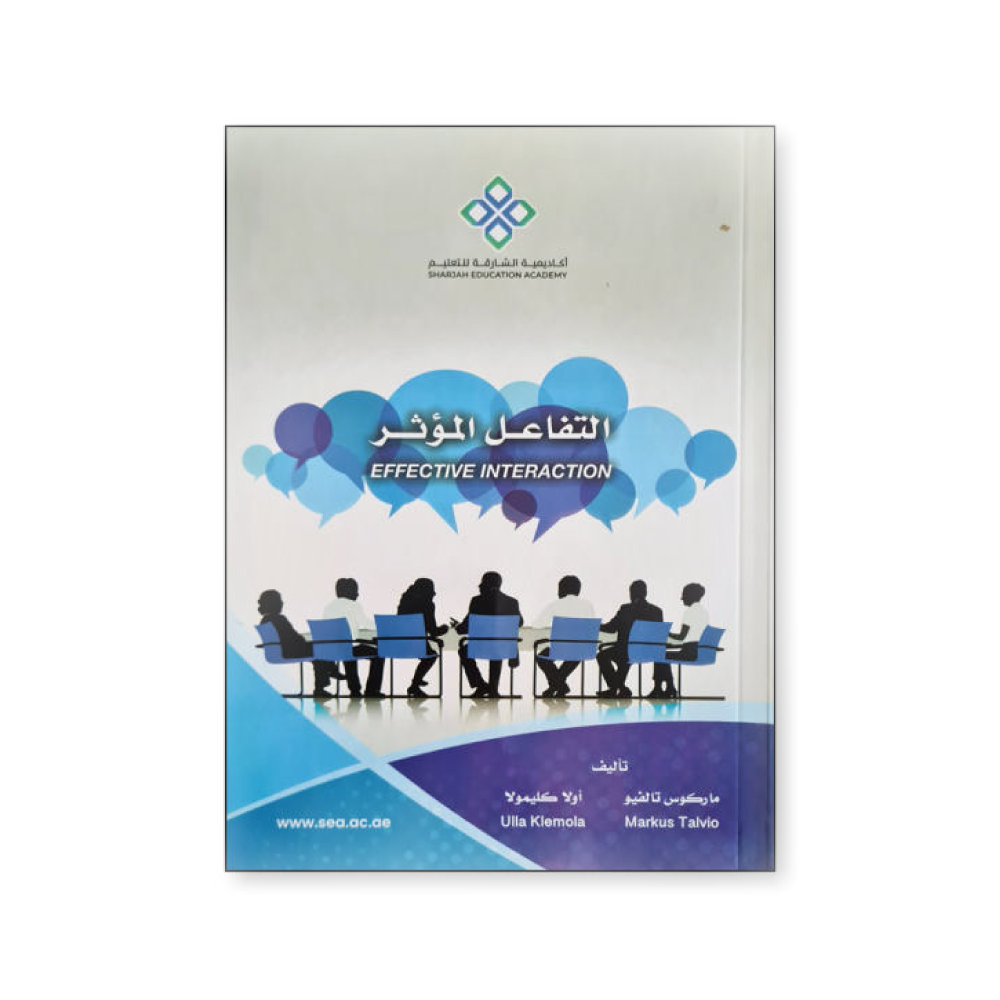
Effective Interaction (Arabic)
Talvio, M. & Klemola, U., 2023,
Dar Tarbiat Alghad.
Dar Tarbiat Alghad.
Book sold out.
Not available for order.
Not available for order.
Books & publications
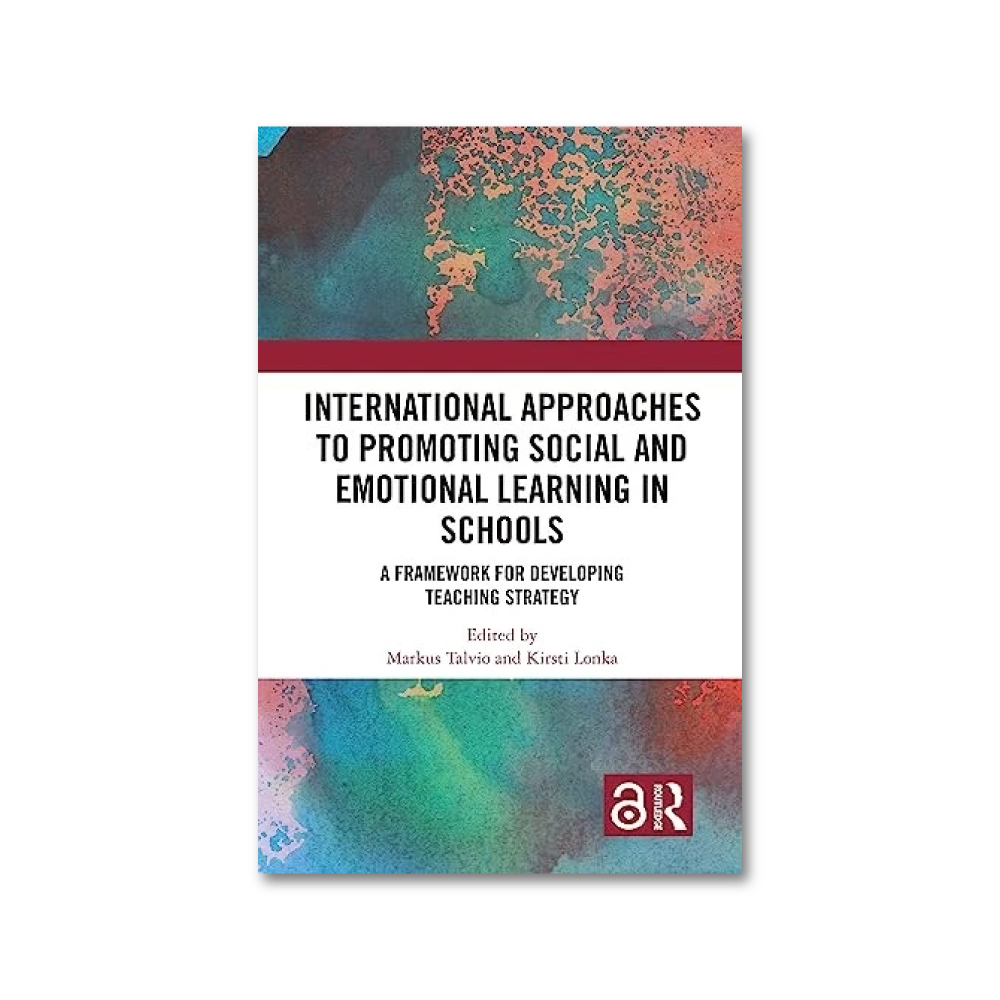
International Approaches to Promoting Social and Emotional Learning in Schools (English)
This book addresses social and emotional learning and its effects on the learning environment and school interaction relationships.
It presents research from nine countries on the social and emotional learning of policymakers, teachers, and teacher trainees, and how it is supported in schools.
The book can be recommended to all teachers, researchers, education leaders, and teacher trainers interested in developing social and emotional learning and wellbeing in schools.
Publisher: Taylor & Francis.
Editors: Markus Talvio & Kirsti Lonka. In English.
Book order page:
It presents research from nine countries on the social and emotional learning of policymakers, teachers, and teacher trainees, and how it is supported in schools.
The book can be recommended to all teachers, researchers, education leaders, and teacher trainers interested in developing social and emotional learning and wellbeing in schools.
Publisher: Taylor & Francis.
Editors: Markus Talvio & Kirsti Lonka. In English.
Book order page:
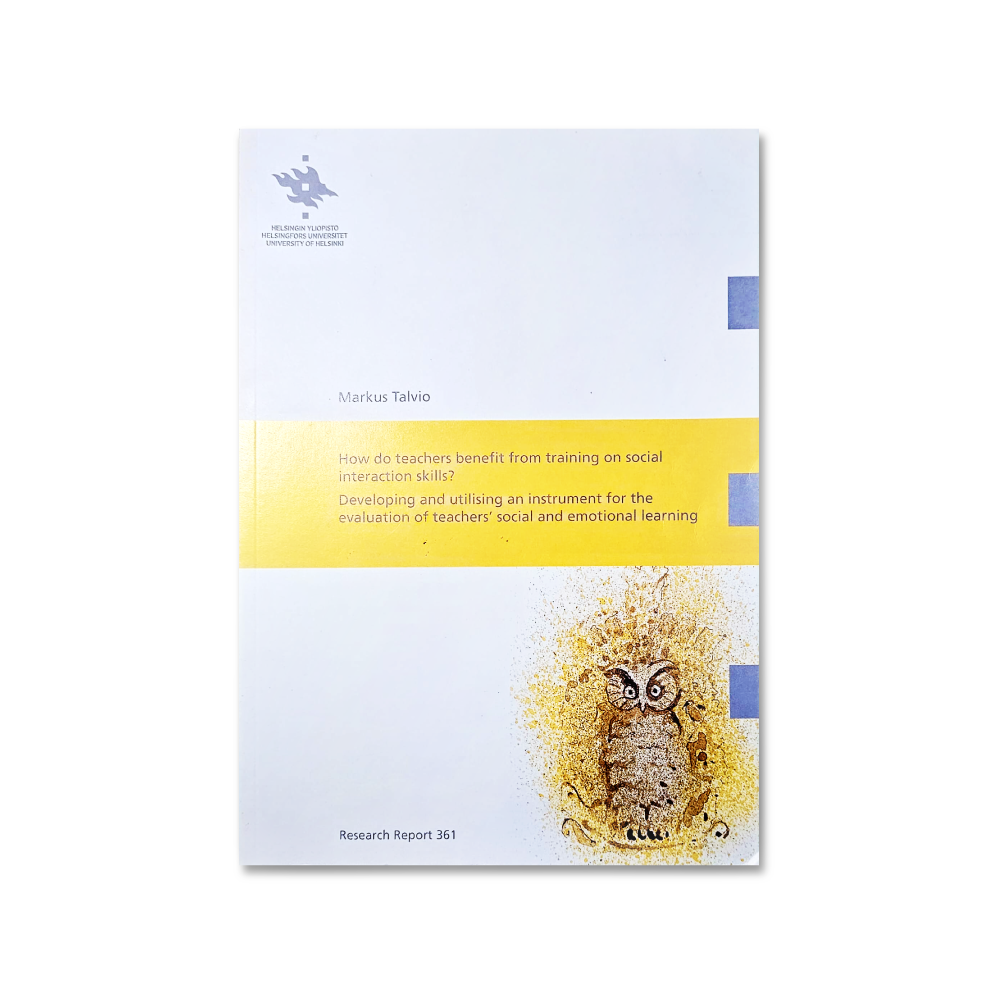
How do teachers benefit from training on social interaction skills? :Developing and utilising an instrument for the evaluation of teachers social and emotional learning
Doctoral Dissertation by Markus Talvio (2014)
Publisher
Helsingin yliopisto
Helsingfors universitet
University of Helsinki
Helsingin yliopisto
Helsingfors universitet
University of Helsinki

Full publication list:
Markus Talvio, PhD
- University Lecturer, Department of Education
- Teachers' Academy
- Research Group for Educational Psychology
About me
I am Markus Talvio, PhD (Educational Psychology), Title of Docent, and supervisor. Over the years, I have gained work experience not only in the public and private sectors in Finland but also in the NGO world and in multicultural environments both in Finland and abroad.
Teaching and its development, as well as promoting wellbeing — including through pedagogical leadership — have been part of my everyday life throughout my career and studies. Supervision and mentoring have also given me windows into, among other places, children's and daycare centers, theater, youth and social services, and congregations. I lecture and provide training at companies across various industries.
Background
- Title of Docent, University of Helsinki, Faculty of Educational Sciences
- Associate Professor, Program Director — Sharjah Education Academy (UAE)
- PhD (Educational Psychology)
- University Lecturer
- Supervisor
- Entrepreneur